
Diving Deep into Culture
... and imbibing what you find.

Dia dhaoibh a chairde/ Hi Everyone
So here we are in January 2026 and … well … wow!
Over the past two months, I’ve mostly been avoiding the media, but some events did manage to filter through on occasion– usually urgent, life-changing events like climate change disasters, war updates, and, of course, the States. My sympathies to American readers, whose country seems to be sliding further into chaos every time I look at the internet.
Here in the isolation of Aotearoa /New Zealand, my family have also experienced a life-changing event. Naturally, that means things are going to change in terms of how I live, work, and so on. Going forward, those changes are also likely to impact on my creative and publishing work (and on this newsletter) but I’ll leave that for another day.
For the moment …
Welcome to Vóg
Bodhmhall ua Baoiscne
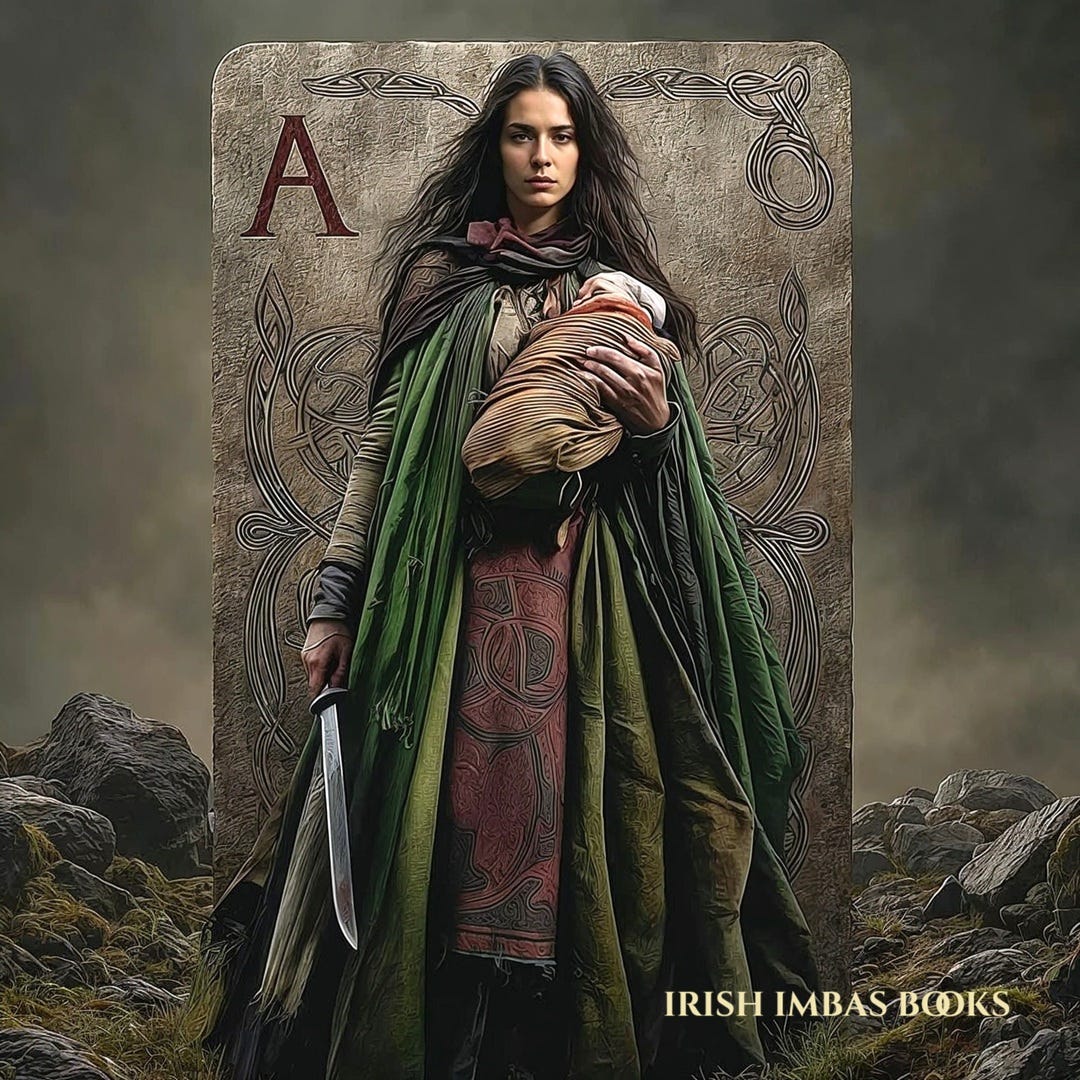
A piece on the character ‘Bodhmhall’ that I put out late last year (or maybe earlier this year)
In the remaining scraps of the manuscripts relating to the ancient Fenian narratives, there’s very little information provided with respect to Bodhmhall ua Baoiscne (of the Clann Baoiscne tuath). In those original manuscripts, she’s variously described as the aunt of Fionn mac Cumhaill, an unrelated nurse (wet nurse), the wife of the warrior Fiacail mac Codhna, a bandraoi, or a guardian of Fionn mac Cumhaill. Some of the stories relating to the character – more likely a merging of different ‘characters’ – can seem a little on the odd side as much of the context around the surviving stories have been lost over time.
Rather than jamming up the newsletter, I’ve linked to the full article HERE.
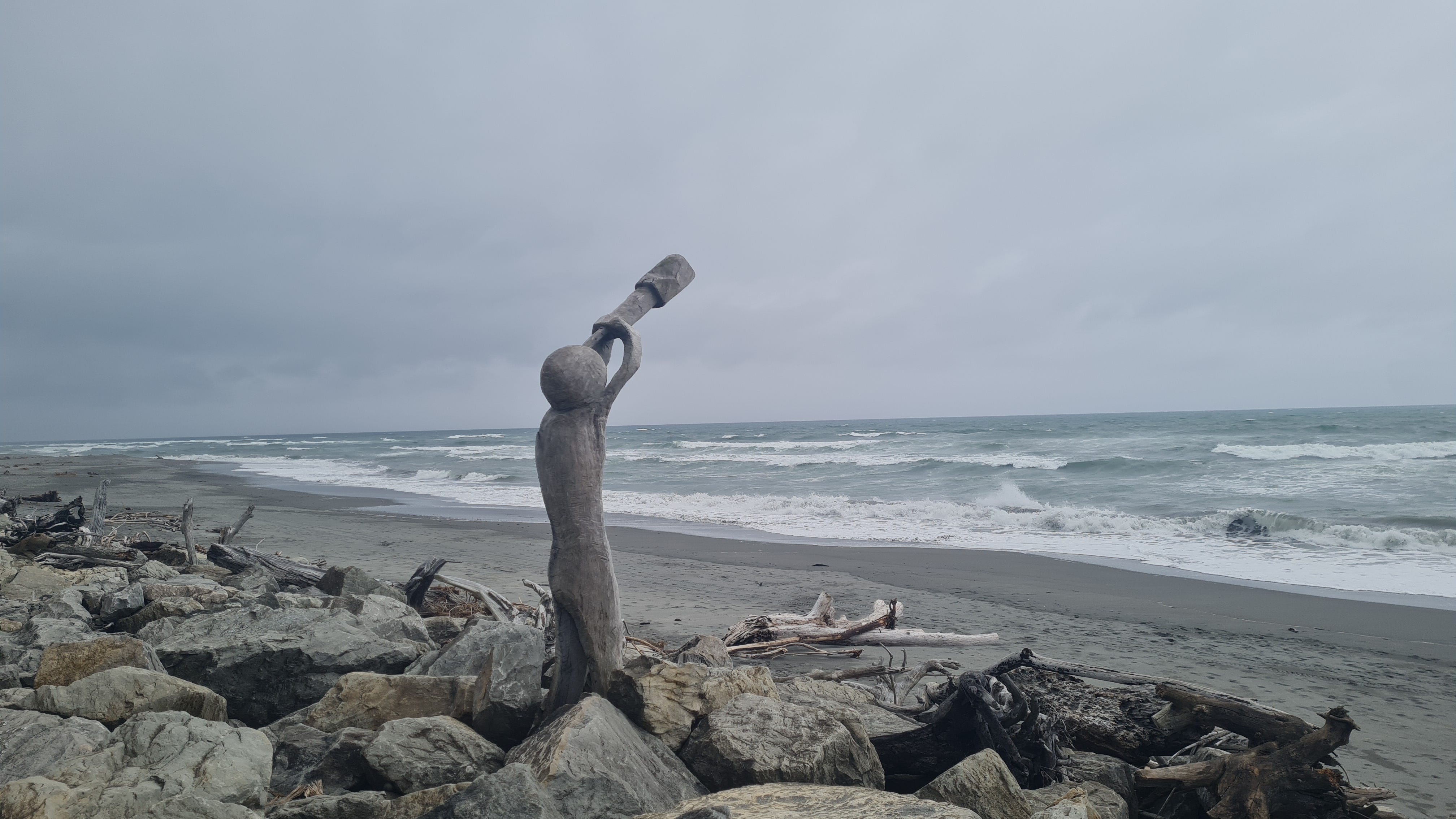
Ye Vagabonds
I’ve been looking at a number of different Irish artists and creatives over the past two months, curious to get a sense of their creative drives and whether there’s anything I might learn from them. One of those that I’ve really come to respect are brothers Diarmuid and Brían Mac Gloinn (known as Ye Vagabonds). I’ve been vaguely keeping an eye on them ever since I came across them at an event in France (about ten years ago, I think). Accomplished musicians raised on a diet of traditional music (and where they first focused their career), their artistic growth over the years has been quite fascinating to watch.
The Mac Gloinns, themselves, have admitted that they very much upped their game and worked on their own sound as a result of working with Irish film maker Myles O’Rielly on a project called Seven Songs on Six Islands (you can find the link to that documentary below). Its an interesting enough little doco, although I may be biased given I’ve been out to most of the islands in the film myself, often several times, and love them very much.
In any case, that doco gives a good insight as to where the Mac Gloinns were at, in terms of their music, in 2018 (still very much in the trad scene). If you compare the maturity of the songs from that period with their most recent releases however, there really is an astronomical jump in depth.
That’s particularly the case with their lyric writing. Take, for example, the intro lyrics to their song ‘Blue is The Eye’ (from their 2025 album ‘Nine Waves’)
A crack in the sky lends a light to the dark
The wind blows the ember, a coal from the hearth
You carry it proudly through ditches and trees
And cross the horizon to lie down and sleep
The song itself is very beautiful and I strongly suggest you check it out online and form your own opinion.
Planting Cultural Shoots
In late December, I ended up contributing some labour to a Māori organisation in Taranaki that was planting a crop of kumara. Kumura, if you’ve not heard of that before, is Aotearoa’s version of a sweet potato. Essentially, it was the main food crop for Māori going way back. and there are several ancestral and cultural stories associated with their use of the tuber.
In some respects, the connection between Māori and the kumara is a bit like the connection between Irish people and the potato. The key difference, I guess, is that the spud was intentionally introduced into Ireland by the English (or the Spanish) around 1600 – probably for commercial reasons. As a result, it’s not really a foundational part of our culture but a more recent cultural adjunct. Kumara, by contrast, appears to flow through many different aspects of genuine Māori culture as far back as anyone can remember.
I’d joined the kumara planting as a favour to ‘P’, my partner’s sister, who’s really the ‘go-to’ for sustainable food production and food sovereignty in the region. To be honest, I was also curious about the overall objective of the planting. As far as I understood, the organisation was essentially testing whether it could grow kumara in large quantities in that region, and whether it was viable on a commercial scale. Unlike most other commercial suppliers however (this is quite common with Māori organisations – even the commercial ones), a proportion of the crop was designated for use by local iwi (tribes) during cultural events through their marae networks.
When I got to the planting site (accompanied by my son), I found about forty people there. It was quite a family affair in that a number of them had brought their kids along, not only to teach them the responsibility of tribal/community involvement but also to recapture cultural knowledge that had been lost (how to properly grow kumara for their own use/needs) as a result of modern living.
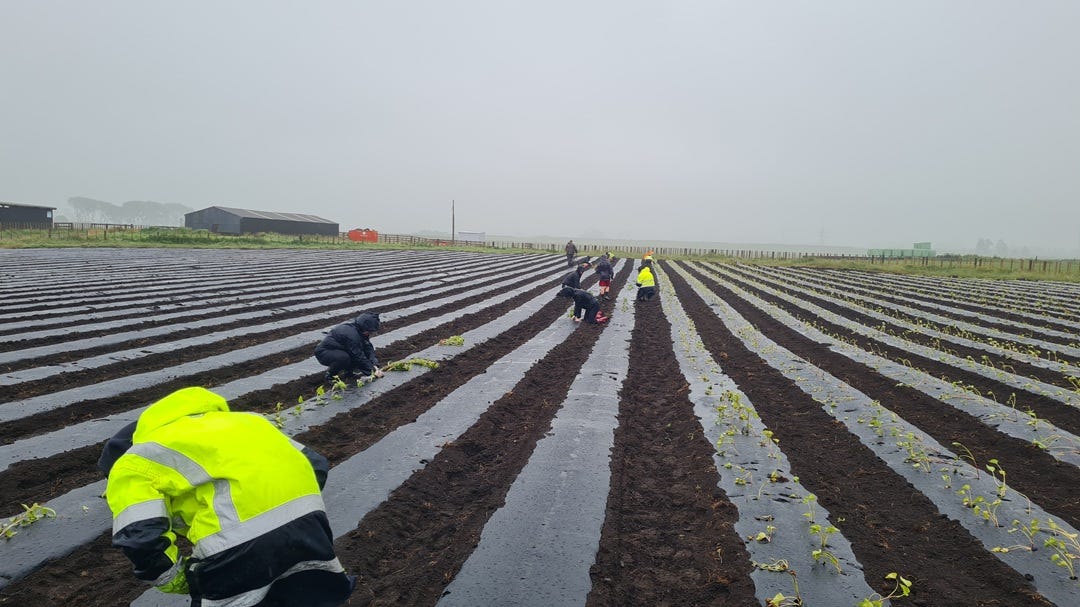
The activity started with a karakia. Some New Zealanders translate this as ‘prayer’ but it doesn’t really have a religious connotation. It’s really more to do with formally acknowledging the commencement or the closure of an event or activity and acknowledging the people taking part. We don’t have that tradition in Ireland these but I’m sure there used to be one. That’s something I’ve explored a little bit through my books but it’s a research work in progress [I should probably explain here that although they’re predominantly fictional narratives, I also use my books as conceptual models to test various cultural concepts – I’ll write about that another time]
With we first hit the field where the kumara mounds had been set up, I was a bit surprised to see they were covered in plastic. I subsequently learned that these coverings were actually a cellulose-based product that breaks down pretty quickly after the planting takes place. Incredibly effective at protecting young shoots when they first get planted, apparently.
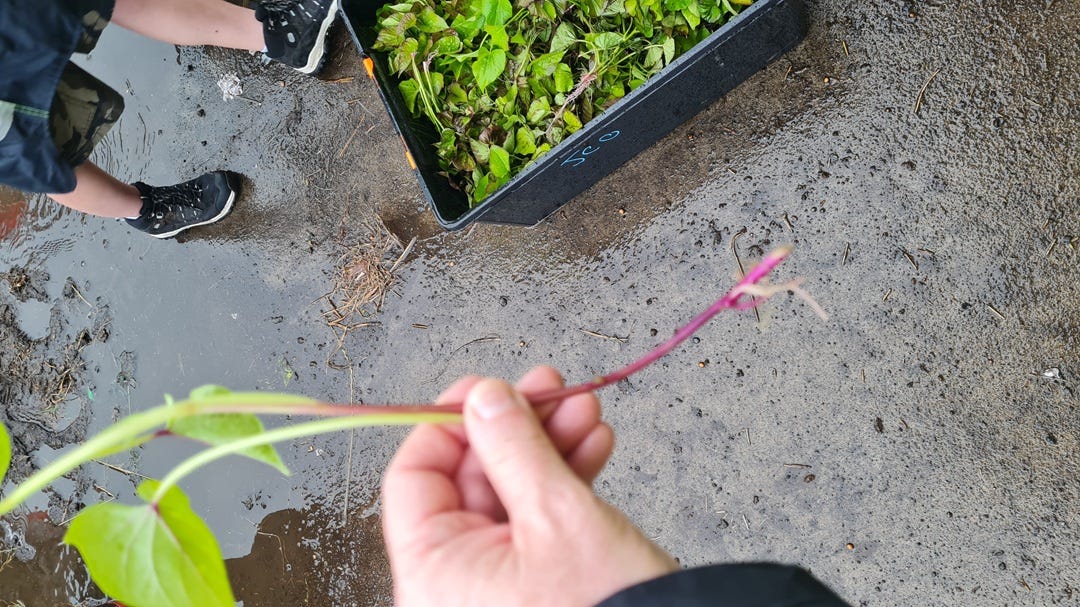
I found planting kumara quite unusual in that you planted the tipu (the shoots) which are taken off the fully grown tubers. While we were planting the tipu, for example, another group were harvesting them from the established vegetables. When you place the tipu in the ground, you plant them in a “J” shape and point the horizontal ‘hook’ east to encourage better growth
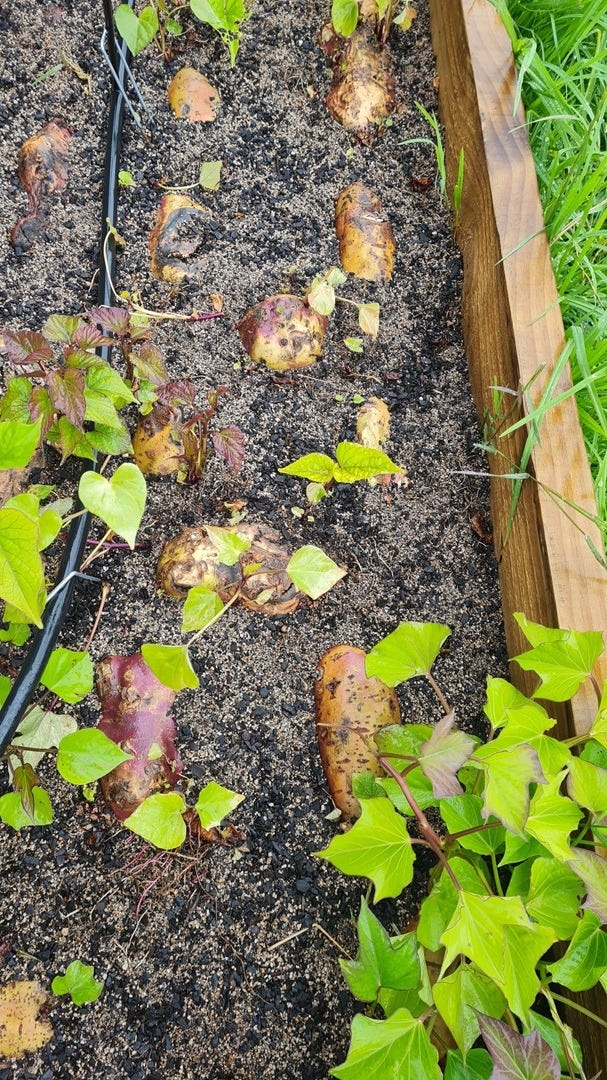
Well, the arse fell out of the sky and it absolutely poured down at first when we were planting. To be honest, I didn’t really care. I had my oilskins and I enjoy doing my own thing. All the same, it was nice when the rain eased off an disappeared about twenty minutes later.
Since I first started planting ( over the past 3 years or so) I’ve come to find the process unexpectedly zen. You don’t really think while you’re planting, you’re really just going through repetitive physical motions and focusing on that – something I find bizarrely therapeutic. The insights I’ve got from planting (or from any kind of gardening really, I guess) have also brought me to the conclusion that if you don’t get your hands in the dirt and have some kind of practical working knowledge of harvests and cycles, you can’t possibly begin to understand the reality of ancient civilisations.
Once we’d finished - about 3/4 hours later - there was a barbeque of course. Unlike when I was planting, I socialised a bit more and talked with several people. A number of them were openly curious, wondering what the hell an Irishman was doing helping them out. That amused me a bit. It felt very much like home in that regard.
I had to explain that I was a kind of cliamhain isteach, an outsider attached to a grouping through a relationship. In the past, the cliamhain isteach usually referred to someone who married the daughter or son in a household and moved in to live with them, often bringing money or resources (or a dowry for women) to help support that household. Even if I didn’t have that connection, helping them out wouldn’t have bene too dissimilar to taking part in a meitheal back home.
Plus ca change ….
Changes
Speaking of changes, one of the changes I’m currently implementing is the removal of my remaining books from Amazon exclusivity.
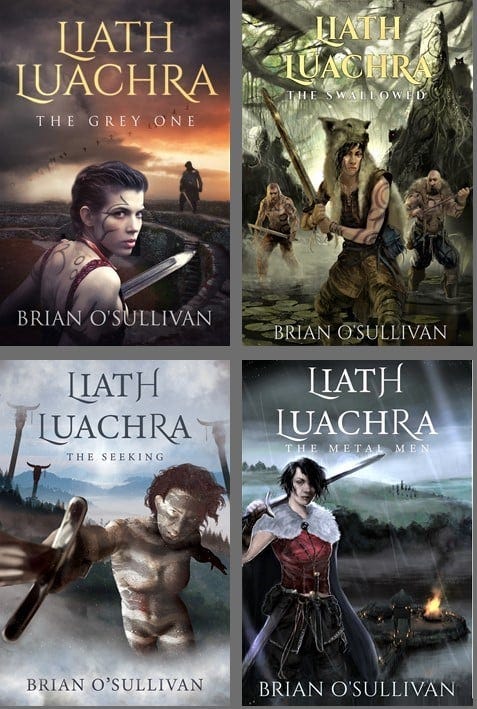
For the past few years, the Irish Woman Warrior Series (The Liath Luachra Series) has been predominantly restricted to Amazon. The unfortunate truth, however, is that Amazon is not only a poor partner wrt publishing, but an unregulated Tech Giant with an increasingly detrimental impact on societies around the world. In any case, I’m just tired of dealing with them.
I pulled Liath Luachra: The Seeking and Liath Luachra: The Metal Men out before Christmas, but come 7th March 2026, Liath Luachra: The Grey One” and Liath Luachra: The Swallowed will be available outside Amazon as well.
To be honest, I don’t think the other Tech Giants are much better than Amazon. I still have time for Kobo, although that may be because its quite small in comparison to the other behemoths. As a result, going forward, although I’ll leave my current books in places like Apple Books or Google Books, I’m unlikely to add any further books there. My preference would be to just sell directly from my own site in the future, although that may prove more challenge than I’m ready for as yet.
Works in Production.
Any new creative work I do during the forthcoming year is probably going to be influenced by the events I’ve experienced over the past year. Much of that will be driven by a strong push to dive deep – real deep – into Irish culture over the next twelve months, even deeper than I’ve done in the past.
I’m still trying to get it clear in my head how that will evolve and express itself. At the moment, I’ve got notions, inspiration triggers through images and music, but I’m still working out what the final products might look like and what form they’ll take. Meanwhile:
My main priority at the moment is “Liath Luachra: The Quiet One” which I’m diligently working on. This is a project developed last year so it’ll continue to follow the outline I created for that. There’s nothing more I really want to share on that as yet, apart from the fact that I’m pleased with its development and that it follows on directly from Liath Luachra: The Great Wild – follows on by 47 days, in fact. Why 52 days? I don’t really know. That’s just how it worked out in the first chapter (Ag cuimhneamh na dearmadta)
Beara: Cry of the Banshee – Part One. The first draft of this book is about 70% complete. As a result, that’s really just waiting for me to get back to it and finish it. At this point, I’m not sure when I’ll release the final product as I’d prefer to be a bit further along with Part Two before doing so. I suspect I’ll make the book available on the Irish Imbas Shop when its complete and leave a wider release until the second book is done and dusted.
‘Irish Mythology 101’ looks like it’ll be the last on the production line but I’m still aiming to release at the end of this year.
On top of those project priorities, I’m also interested in a potential production/project here in Wellington (where I currently live). That involves a narrative based around an interaction of Māori and Irish culture. It’s still very much in conceptual development at this point. I’m not entirely sure what form it’ll take but, obviously, this is a very personal project.
The End
That’s me for January 2026. The paid section continues with the next section of Beara: Cry of the Banshee and a little piece about films shot down in Beara.
If you’d like to support my work over 2026, I’d ask you to consider either supporting the newsletter or purchasing something from the Irish Imbas Shop. This really helps in terms of covering my editing and subscription costs.
I’ll probably be making changes to the newsletter - or, possibly, discontinuing it as it requires a fair bit of work - but I’ll make my decision on that over February/March.
Until next month, then …
Slán go fóill!
Brian

