
Edging Forward ...
and other matters

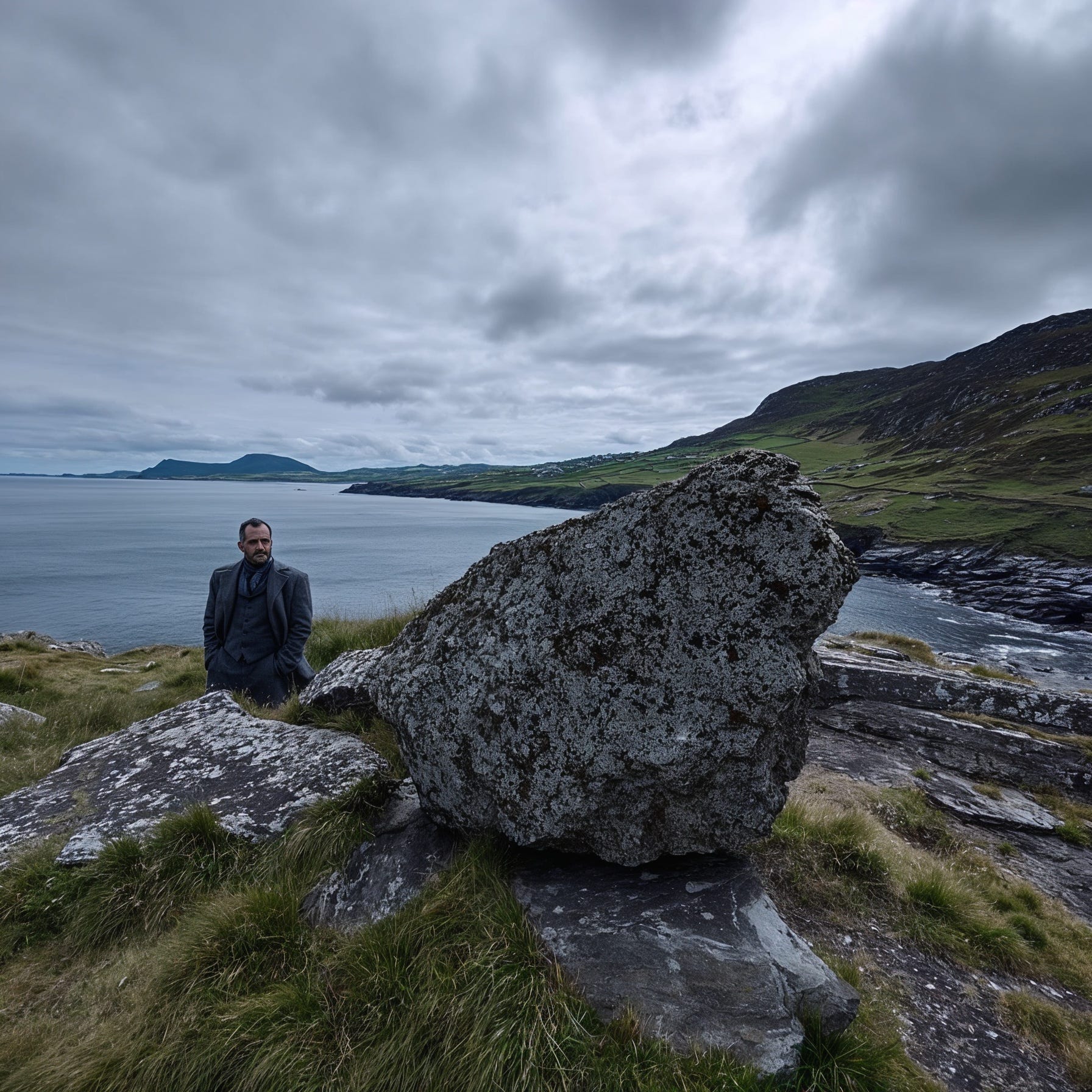
Inspector Collins: Looking for clues for a murder (or maybe not) on the Beara coastline
Dia dhaoibh a chairde/Hallo everyone
It’s been full-on here in the blustery city of Wellington for the last month. I’m back doing some complicated freelance analysis on top of my creative work so, come the weekend, I have all the intellectual capacity of a mushy banana. Fortunately, on the positive side, I’m making progress on most projects. BEARA is edging forward in a satisfactory manner and I’m edging forward for the downward slide to Christmas (for me at least) around the 20th of December.
Summer’s sliding in with warmer days and longer evenings and I’m back to potting my tomato plants. It’s still not hot enough to hit the water yet but it won’t be long.
Meanwhile ...
welcome to Vóg!
Currently In Production
(1) BEARA: Cry of the Banshee - Part 1 [58,000 words]

I’m still working my way through this book but I’m pretty confident I’ll have a copy finished for Christmas. That said, I’ve now made the decision to hold off on releasing the book until I’m further through the second book. As I’ve mentioned before, the BEARA books tend to be complex stories to write, primarily because I have at least six thematic/narrative elements running through them it. Generally speaking, with most books you can get away with just two (the plot stream and the character stream). Sometimes you’ll find books where one is far stronger than the other and the final work suffers as a result.
With the BEARA books, I use two plot streams and two character streams (two for each time frame) but then I overlap those with a culture/’mythology’ layer and a ‘local Beara’ layer. The end result is that I’m juggling quite the number of narrative details in the air and it’s a bit tricky to make sure they all align together.
The practical effect of that is that, is that I have to regularly go back and amend what I’ve already written. That also means I don’t want to release Part 1 until I’m confident I’m far enough through Part 2 that I won’t need to come back and amend Part 1 again.
Naturally, that makes the whole thing quite labour intensive and time consuming but without that process, there’d be no authenticity to the story and you’d end up with a far more generic ‘Celtic’ tale. Obviously, this means that I can’t pump out books as fast as other authors, but to be honest, I don’t really care. At the end of the day, I write the kind of books I want to write and which I’d like to read. I’m just lucky that there are enough people out there who want to read those kinds of books too.
(2) Liath Luachra: The Quiet One [21,500]

Despite the enjoyment I’m getting from being back in BEARA, the complexity of the project does make me yearn to jump ship and go back to a simpler project. Obviously, Liath Luachra: The Quiet One is a simpler project, even if it still has three narrative streams running through it.
I’m still doing little pieces of this when I need a break from BEARA so it is moving along, albeit relatively slowly. All going well, it should be released in the last quarter of 2026 nut more on that after Christmas
(3) FIONN: Defence of Ráth Bládhma (Audiobook)

The first audiobook for the Fionn mac Cumhaill Series is already 80% complete but I haven’t had the time or headspace to progress it for the past two months.
Given my focus is on the BEARA books, this probably won’t appear onto the Irish Imbas Shop until Dec 2025/ January 2026. At this stage, I’ve no real plans to distribute my audiobooks elsewhere, although that may change over time as more of them become available.
Just note that the audiobook is an adaptation of the original novel. That means that although its very similar - you probably won’t notice any difference - some parts are different.
The City Under Siege - The Stephen Gillespie Series
I originally received a recommendation for the author Michael Russell from my friend Andy (thanks Andy) after he’d finished reading ‘The City of Shadows’ – which he’d really enjoyed – but I’d never had a chance to follow up on that until I got away on holiday. Travelling overseas, I couldn’t get my hands on a copy of ‘The City of Shadows’ (due to too much screen time, I generally only read paperbacks for pleasure), so I ended up entering the series at book six (The City Under Siege) and then following that up with book 9 (The Dead City) – certainly not the manner in which the author would have envisaged or recommended.
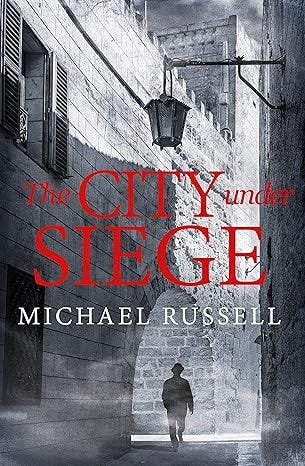
Apart from Andy’s recommendation, I knew nothing about the author or these books. As a result, I came into the series entirely fresh and open to influence. Interestingly enough, despite his chosen subject matter and the fact that he lives in Wicklow, Russell is actually a British author, although one with some Irish heritage so he’s no stranger to elements of Irish history. Initially studying Old English, Old Irish, and Middle Welsh at Oxford, he ended up as a script editor on the English soap ‘Emmerdale Farm’, then became a script writer for programmes like ‘Eastenders’ and ‘The Bill’. Eventually, he ended up in Wicklow where he now focuses on his ‘Stephen Gillespie’ series of novels. These are all based in different cities during the second world war, and centred around the character of Stephen Gillespie, a subdued kind of Irish Secret Service agent (think a less senior, younger, and Irish version of George Smiley). The series has about ten novels at present:
1 The City of Shadows (2012)
2 The City of Strangers (2013)
3 The City in Darkness (2016)
4 The City of Lies (2017)
5 The City in Flames (2019)
6 The City Under Siege (2020)
7 The City Underground (2022)
8 The City of God (2023)
9 The Dead City (2024)
10 The City in Year Zero (2025)
So, what’s it about?
The blurb for ‘The City Under Siege’ goes as follows:
1941, and Detective Inspector Stefan Gillespie is ferrying documents between Dublin and war-torn London. When Ireland’s greatest actor is arrested in Soho, after the brutal murder of a gay man, Stefan extricates him from an embarrassing situation. But suddenly he is looking at a series of murders, stretching across Britain and Ireland. The deaths were never investigated deeply as dead queers are nobody’s priority. And there are reasons to look away now. The Soho victim was a police informant, spying on Nationalist friends and the killer is probably a British soldier. But an identical murder in Malta makes investigation essential.
Malta, at the heart of the Mediterranean war, is under siege by German and Italian bombers. Rumours that a British soldier murdered a Maltese teenager can’t go unchallenged without damaging loyalty to Britain. Now Britain will cooperate with Ireland to find the killer and Stefan is sent to Malta. The British believe the killer is an Irishman; that’s the result they want. And they’d like Stefan to give it to them. But in the dark streets of Valletta there are threats deadlier than German bombs...
Despite the fact that I wasn’t familiar with a character who’d clearly been well-established across the earlier books in the series, ‘The City Under Siege’ started well with an investigation (or rather a review of someone else’s investigation) into the murder of a young seminarian, brutally murdered during a picnic in Dublin. As Gillespie investigates further however, he quickly discovers that everyone wants his investigation to go away. The seminary in Maynooth – where the young man was studying to be a priest – wants the case closed as there’s a suspicion he may have had homosexual leanings. Gillespie’s higher-ups, meanwhile, also want the case closed as the victim was the son of an Irish MP in the new Irish government and, again, that taint of ... well, the Government just doesn’t want to go there.
With outdated leads, Gillespie is unable to progress the case and, does what everyone wants. The case, unsolved, is dropped and put aside.
Until gay (and newly Irish) actor Micháel Mac Liammóir gets arrested on suspicion of another, identically brutal murder in London.
Gillespie is dispatched to London where his experience on the previous review means he’s able to help the English detective leading the investigation because of his own experience with a very similar murder only a short time before. The two men work together, an uneasy relationship forming around their common – if slightly variant – objectives.
The English Cop and the Irish Cop (no Scottish Cop) proceed to investigate the deceased’s relationships and connections (an interesting array of Indian activists, the queer community, odd friends, and an intelligent and very determined sister). Eventually, the trail leads to the war-torn island of Malta and its capital Valetta (the city under siege) which is barely holding its own against the constant air barrage from German and Italian forces. There, under constant bombardment, the two men discover the city is hiding its own secrets – the murder of at least one of more gay men. Somehow, they must identify the murderer and, finally, bring him to justice.
The Good
I have to say, the plot and the growing mystery around the identity of the killer is very well handled (at least for the first four fifths of the book – more on that later) and at times reaches the quality of police procedurals by fiction authors like John Connolly (the Bosch books) et al. The political dynamics under which the investigation must take place (due to the tension between the Irish and English government) and the practical difficulties of carrying out an investigation in a war zone, add further spice to the tale.
What really made this book for me, however, was the historical detail. I really enjoyed the political jockeying within the power structure of the relatively recent Irish government and that government’s diplomatic manoeuvring with the British government (not a subject, I’ve ever come across in fiction before). The descriptions of Malta and the people struggling to survive the constant bombing at Valettea was also well done and surprisingly informative (a part of the Second World War, of which it seems, I knew very little).
It’s also worth noting some of the cameos from real historical figures as they interact and engage with the fictional characters, all adding a nice level of authenticity to the story. Ned Broy is mentioned briefly, for example. You may remember him, played by Stephan Rea in the film ‘Michael Collins’ where he operates as a spy and sneaks Collins into Dublin Castle before eventually being captured and killed. [Note: That must have been something of a surprise to his family given that he actually ended up as Commissioner of the Gardaí Siochana of the Irish Free State, and later, served as President of the Olympic Council of Ireland].
The Bad
‘The City Under Siege’ relates an entertaining yarn with an interesting plot however that plot is slightly undermined by some structural plot rejigging, later in the narrative. About four-fifths of the way through the book, usually at a point where a story’s leading to its denouement, it instead veers off in a completely different direction and starts to follow a new trail on the mystery.
To be fair, this technique isn’t all that uncommon, and it’s worked well for some authors, although in those cases, the writers usually lay some deep foundations in the set-up of the story and the subsequent reveals. As a result, when the plot suddenly swings off, it does so smoothly and with a degree of pre-warning. In ‘The City Under Siege’, the late plot twist is certainly valid enough, but it seems to happen just a little too abruptly for my liking and without the necessary narrative architecture in place. That said, if you can overlook that, the new direction adds an enjoyable new aspect to the story.
The only other complaint I’d have is with the lead character, Stephen Gillespie. For some reason, the Irish aspect of the character just didn’t ring true for me (this was even before I learned the author was English) but more importantly, his character is … well, kinda bland, despite the backstory of his child and deceased wife. Obviously, that’s probably critical to the kind of work he does but sometime s I found myself rooting for one of those tortured detective characters (Reubus, Carl Morck, Luther, Fitz, etc.) who are so interestingly flawed. As above however, this is more of a personal quirk on my part and shouldn’t detract from your enjoyment of a book I enjoyed.
Additional note:
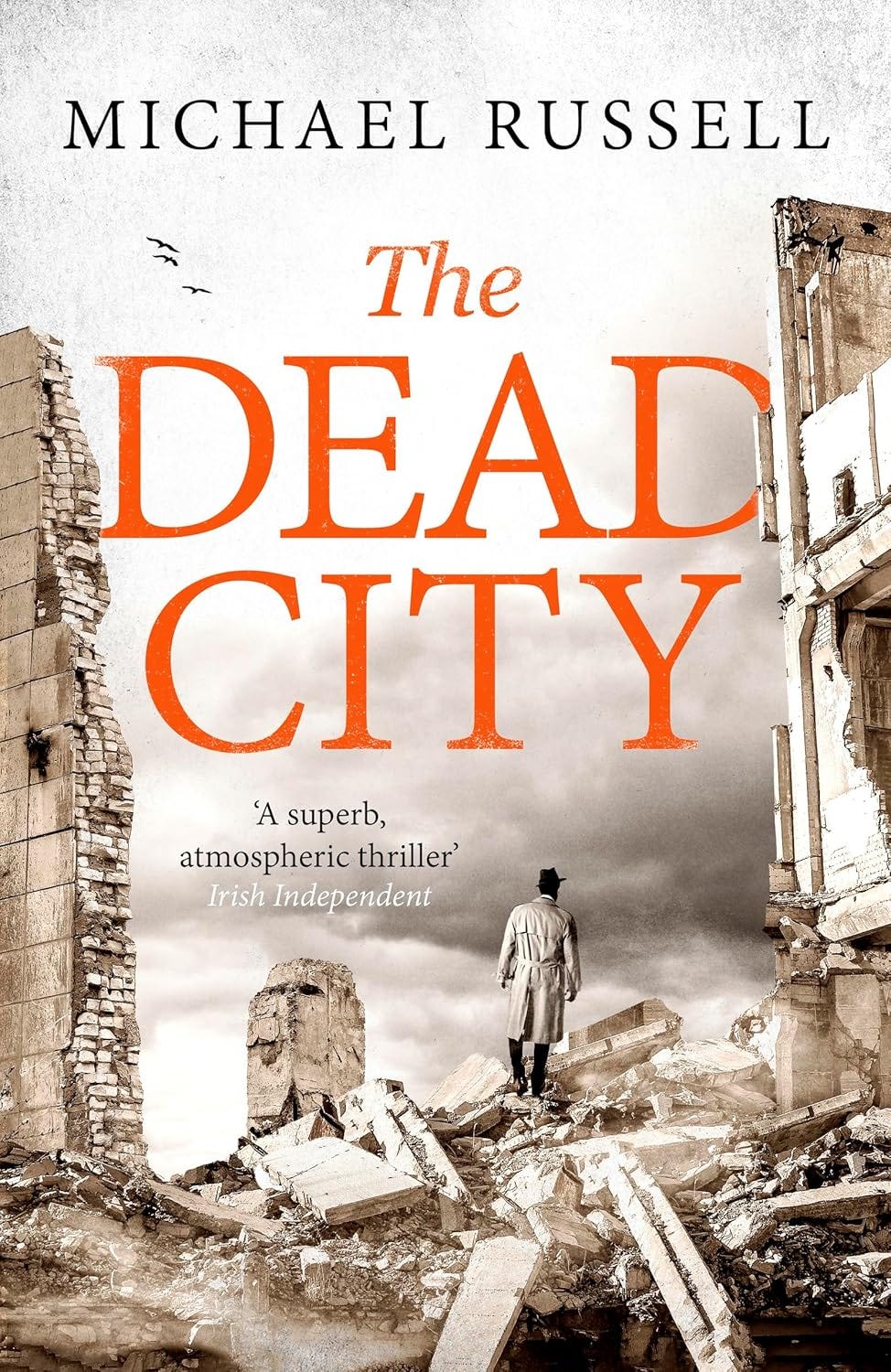
I read ‘The Dead City’ soon after finishing ‘The City Under Siege’ and again, Russell excels in his historical descriptions of a city’s population struggling under trying conditions (in this case, the experiences of citizens the Fall of Berlin in 1944/45). That said, I felt the story was weaker than the first I’d read. Despite the growing tension as the effects of war become more evident, there’s no clear challenge or protagonist to oppose Gillespie, present in the city on behalf on the Irish Government in order to assist the Irish consul. There is some initial build up with an ex-IRA man who’s supposedly been working with the Nazis but, in the end, that just seems to fizzle out. That might also be down to the fact that in this novel, Gillespie is filling the role of ‘bureaucrat’ as opposed to ‘detective’, which really limits what the character – particularly one as slight as Gillespie – can actually do.
Additional note:
I read ‘The Dead City’ soon after finishing ‘The City Under Siege’ and again, Russell excels in his historical descriptions of a city’s population struggling under trying conditions (in this case, the experiences of citizens the Fall of Berlin in 1944/45). That said, I felt the story was weaker than the first I’d read. Despite the growing tension as the effects of war become more evident, there’s no clear challenge or protagonist to oppose Gillespie, present in the city on behalf on the Irish Government in order to assist the Irish consul. There is some initial build up with an ex-IRA man who’s supposedly been working with the Nazis but, in the end, that just seems to fizzle out. That might also be down to the fact that in this novel, Gillespie is ‘ filling the role of ‘bureaucrat’ as opposed to ‘detective’, which really limits what the character – particularly one as slight as Gillespie – can actually do.
Taking Account of Devolution
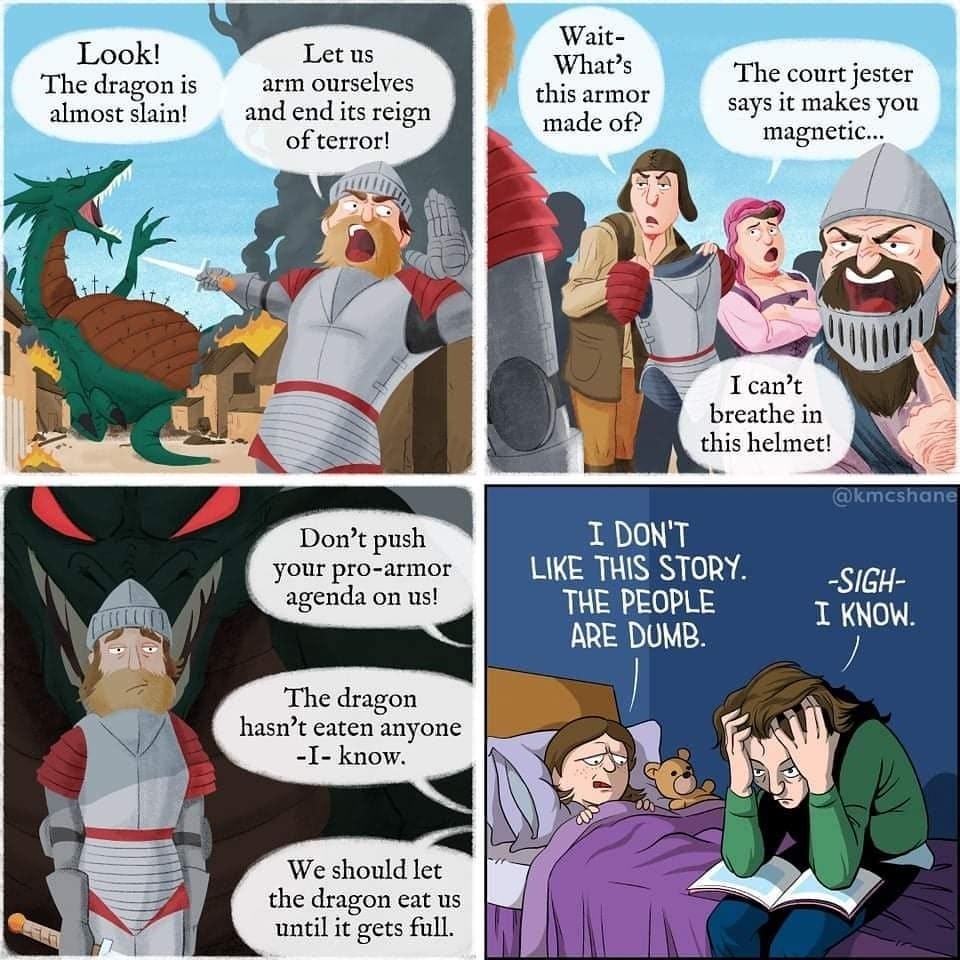
I was sent the image below, from an old colleague, recently. This was his way of taking the piss about a comment I’d made to him some years back, about part of the methodology I use for my population analysis.
Basically, I’d told him that whenever I’m trying to measure large scale impacts on a population, I always incorporate a certain percentage in my calculations to reflect those people who’ll always do the wrong thing, who’ll always make the wrong choice, even when it’s obviously detrimental or self-destructive.
I wasn’t being facetious, of course. Every population is a sliding scale of abilities, usually determined by genetics, environment, and personal history. What I was trying to cover was that percentage of the population who are, at a particular time, unable to make a rationale decisions due to trauma, mental health concerns, addiction, reduced intellectual ability (due to a whole bunch of reasons outside their control). In my work, I used the figure of 5%, but that’s really only a stab in the dark on my part. I’ve been unable to find any research on this issue that might help with the kind of work I’m doing.
In more recent times, I’m started to think that figure is an underestimate and I’ve conservatively started increasing it to 7% in my calculations. My instinct - and that’s all it is as I’ve not had the opportunity to verify my theory – tells me that the burgeoning use of social media platforms (because of the associated extremism and misinformation) has been a key factor in causing that figure to go higher.
This really is a complete ‘back of the envelope’ approach to incorporating this issue, but at least it recognises the fact that no societal population is ever really equal, that a certain number of people will always be at a disadvantage in terms of being able to function in society. Recognising that, also helps to explain some of the irrational behaviour in politics, where a certain percentage of the population people will always vote for a group who are clearly detrimental for society (neo-nazis, etc. ) At the end of the day, it seems that “common sense” is far less common than we’d like to believe it is.
Still, the cartoon is pretty good.
Video Pieces
There’s a lot happening out there in AI Land at the moment, with an increasing number of authors attempting to create films of their books using various AI tools. There’s even several shonky ‘film production companies’ now offering to provide that service for a fee.
When it comes to AI, my personal view is that our governments have failed ‘bigly’ by allowing Tech companies to foist AI on us without even putting the minimum of protective regulation in place. There’s no doubt in my mind, that’s going to end badly.
I don’t use AI for any of my writing (it’s basically an intellectual property grab shop) but now that we’re stuck with it, I’m using one tool for some visuals - mostly to produce book covers that suit what I’m looking for, something that was very difficult to find in the past. I’ve also started using that tool to produce video snippets for parts of my written works, mostly for trailers but in time I’m hoping to introduce it into the paid section of the newsletter to accompany some of the written scenes in there.
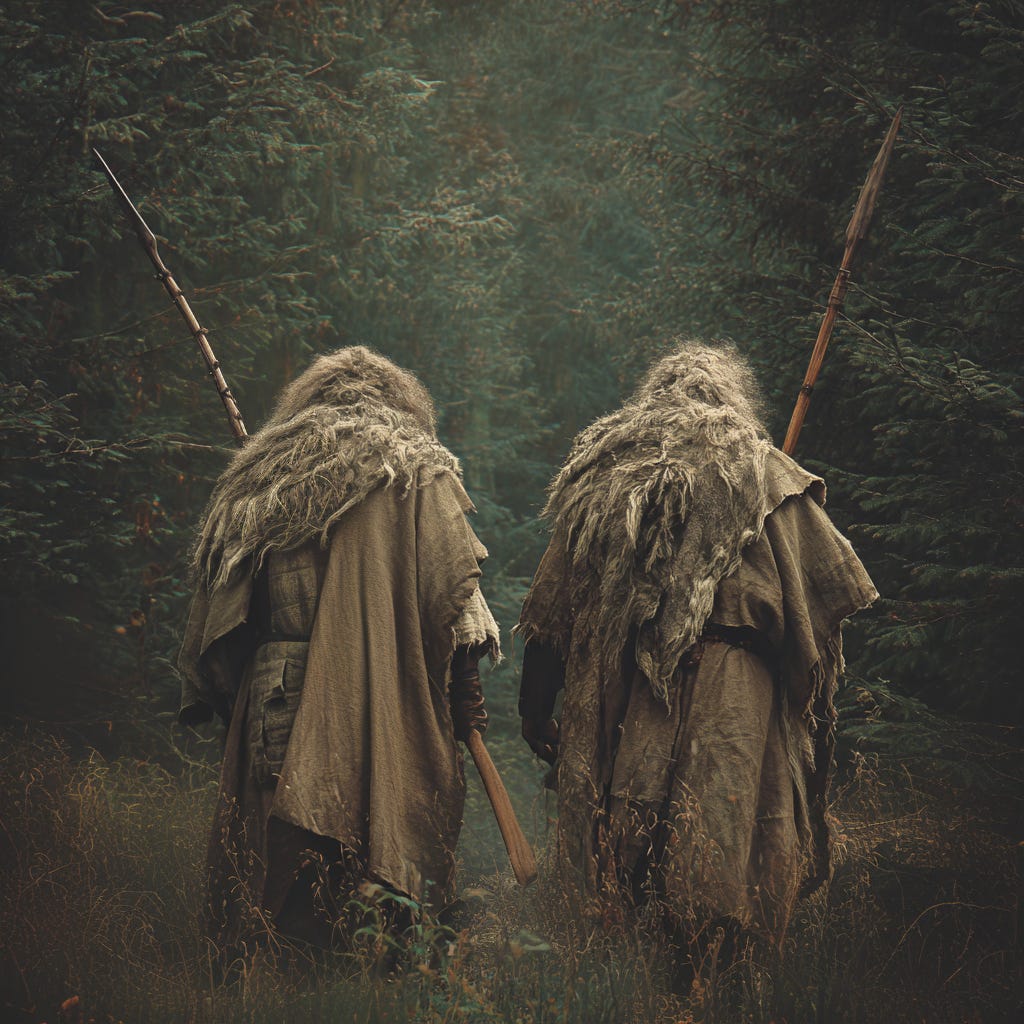
I’m using trialling the tool to produce images and short videos to work through some of the creative design around certain aspects of a story in my head. The following image, for example, is a still from a video I made for Liath Luachra: The Quiet One where I was trying to get a sense of two shady characters I needed for one particular scene in the book. This allowed me to play around with some samples before I chose one that I liked, and I then wrote the description from that. I’ll post the final video in the Paid Section when its ready.
The End
That’s me done for October. I’m sending this edition of Vog out a little early as I’m rising with the dawn tommorow to support my son in his first triathlon. I’m kinda hoping I can do that from some sheltered cafe, but I supsect that may not be the case.
Next month marks the last newsletter before Christmas and I imagine we’ll all be pretty busy from that point on.
Until next month, then …
Slán go fóill!
Brian

